Why Toads Cross the Road

Every spring, something remarkable happens across the UK. On mild, damp evenings, thousands of toads begin a journey they have made for generations. Quietly emerging from woodland, hedgerows and gardens, they start making their way back to the pond where they were born.

For many of them, that journey now involves crossing roads.

At Five Gates Lane in Belton, volunteers regularly witness this ancient movement as amphibians follow their natural migration route towards a nearby breeding pond. But why do toads cross the road in the first place?

Meet the Common Toad (Bufo bufo)

The species most often seen during migration is the common toad (Bufo bufo). Despite their name, common toads have been declining in parts of the UK in recent decades.

For most of the year these amphibians live on land, hiding in woodland, gardens, fields and hedgerows. They emerge mainly at night to feed on insects, slugs and other invertebrates, helping to maintain balance in the local ecosystem.

But once a year something remarkable happens. An instinct drives them to return to the same breeding pond where they were born.

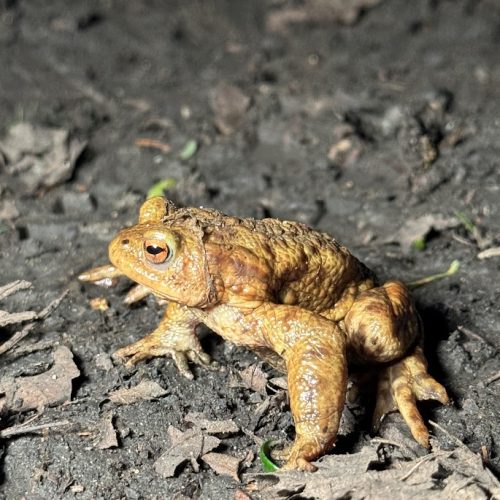
Common toad (Bufo bufo) on the ground during spring migration season
The common toad (Bufo bufo) is the species most often seen during migration season at Five Gates Lane.

What is Toad Migration?

Each spring, common toads begin their annual migration back to breeding ponds.

This journey can take them across fields, through woodland and, increasingly, across roads. Toads often travel considerable distances to reach the pond where they hatched, guided by natural cues and instinct.

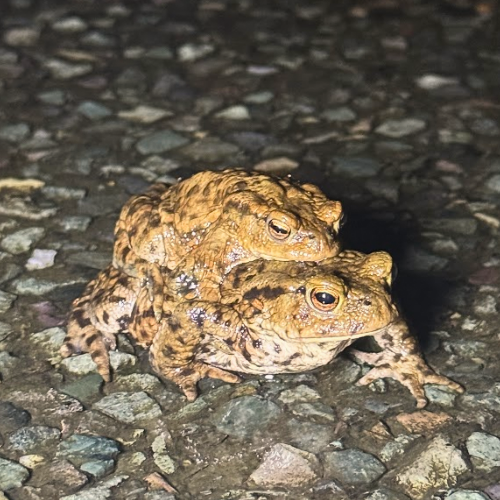
During migration it’s common to see males already clinging onto females in a behaviour known as amplexus. By holding onto the female as she travels, the male ensures he is ready to breed once they reach the water.

Male common toad holding onto a female during migration across a road
A male common toad clings onto a female during migration in a behaviour known as amplexus as they travel towards the breeding pond.

When Does Migration Season Happen?

In the UK, migration typically takes place between February and April.

The exact timing depends on weather conditions. Toads usually begin moving when:

  • temperatures rise above around 5°C

  • evenings are damp or rainy

  • the ground is frost-free

Warm, wet evenings can trigger large numbers of toads to move at once, which is why volunteers sometimes refer to peak nights as “toadmaggedon.”

Why Roads Are So Dangerous

Toads have followed the same migration routes for thousands of years as they travel between their winter habitats and breeding ponds. Unfortunately, many of these ancient paths now intersect with modern roads.

Because toads move slowly and often pause when they encounter bright lights or vibrations, they are particularly vulnerable to vehicles. On busy roads, large numbers can be killed while attempting to cross during migration.

Sometimes toads may appear to turn around or change direction while crossing a road. This can happen when they encounter bright headlights, traffic vibrations or other disturbances that interrupt their route. Windy conditions may also play a role. Toads rely partly on environmental cues and scent to orient themselves towards their breeding ponds, and changes in wind direction can affect how those cues travel, occasionally causing them to pause or adjust their direction.

Importantly, helping toads cross the road is not interfering with nature. The road itself is not part of their natural habitat – it is a modern obstacle that cuts across ancient migration routes. Volunteer patrols simply help reduce the impact of roads on wildlife and allow amphibians to continue their journey safely.
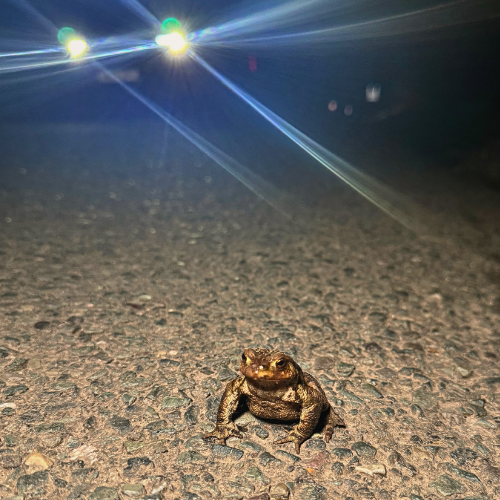
Common toad crossing a road at night with approaching car headlights
Common toads move slowly during migration, making roads particularly dangerous when vehicles approach.

At sites like Five Gates Lane in Belton, volunteers regularly see the scale of this migration as amphibians attempt to cross the road on their way to the breeding pond. Without help, many would struggle to complete the journey safely.

Across the UK, many communities take part in this effort. Organisations such as Froglife’s Toads on Roads project support local patrols and help protect these remarkable seasonal migrations.

What Happens at the Pond?

Once they reach the breeding pond, the focus shifts to reproduction.

Male toads often arrive first and wait in the water or around the edges of the pond for females to appear. During migration it’s common for males to already be holding onto females in a behaviour known as amplexus, where the male grips the female as they travel towards the water.

When the pair reaches the pond, the female lays long strings of eggs, known as toad spawn, which are wrapped around underwater plants or vegetation. A single female can lay thousands of eggs during the breeding season.

These eggs soon hatch into tadpoles, beginning the next stage of the toad life cycle. The breeding period at the pond usually lasts a few days to a couple of weeks, after which adult toads gradually leave the water and return to their terrestrial habitats.

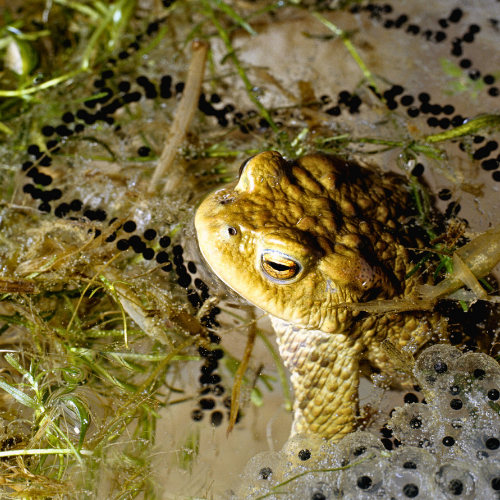
Common toad in a breeding pond surrounded by amphibian spawn
Breeding ponds become busy during migration season as amphibians gather to spawn.

Many will spend the rest of the year in woodland, hedgerows, gardens and fields before repeating the journey again the following spring.

From Spawn to Toadlets

Later in the season, the next generation begins its journey.

Tadpoles gradually develop legs and transform into tiny toadlets. These miniature toads leave the pond in large numbers and disperse into the surrounding landscape, where they will spend several years growing before eventually returning to breed themselves.

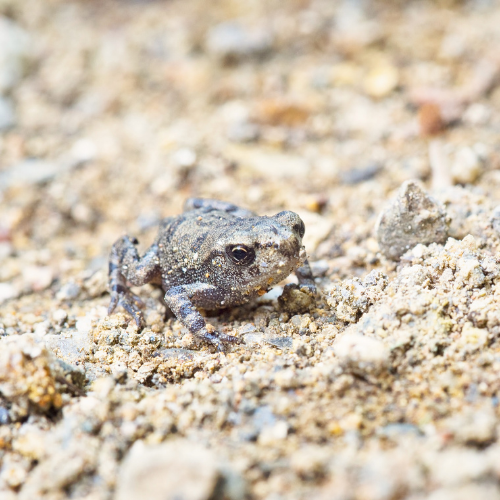
Young Toadlet Beginning Life on Land
Tiny toadlet on sandy ground after leaving a breeding pond

A Journey That Has Happened for Generations

Toad migration is one of the UK’s most remarkable seasonal wildlife events. Each spring, these amphibians follow ancient routes back to the ponds where they were born, continuing a natural cycle that has taken place for generations.

Today, many of those routes intersect with modern roads. Thanks to volunteers, increased awareness and drivers slowing down along places like Five Gates Lane, more amphibians are able to complete their journey safely.

You can follow updates from the local migration season in The Patrol Log, where volunteers share stories and observations from Five Gates Lane.

If you’d like to find a toad patrol near you, Froglife provides a national map of migration sites through their Toads on Roads patrol map.