From Spawn to Toadlet: The Life Cycle of a Common Toad
The common toad life cycle begins each spring when adult toads return to breeding ponds across the UK. After months spent living on land in woodland, gardens and hedgerows, they make their annual migration back to the water where they were born.
While the journey to the pond is often the most visible part of their story, it’s only the beginning of a much longer process. From eggs laid in the water to tiny toadlets leaving the pond later in the season, the early stages of a common toad’s life are both fascinating and fragile.
The Common Toad Life Cycle
The life cycle of the common toad (Bufo bufo) follows several stages, beginning in the breeding pond and continuing on land.
1. Eggs (Spawn)
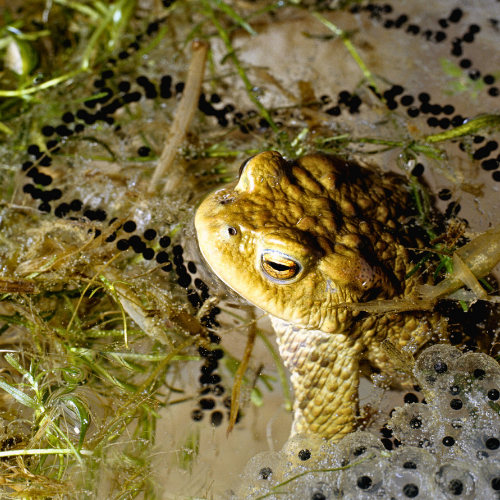
Female toads lay long jelly-like strings of eggs in ponds during spring.
2. Tadpoles
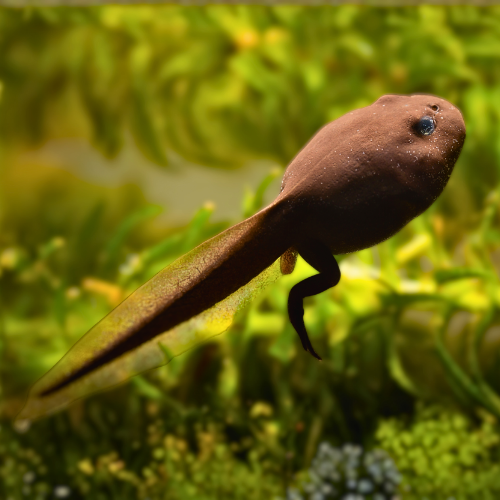
The eggs hatch into tiny black tadpoles that live entirely in the water and feed on algae and organic matter.
3. Developing Tadpoles
Over several weeks the tadpoles grow legs and begin to develop lungs as their bodies transform.
4. Toadlets
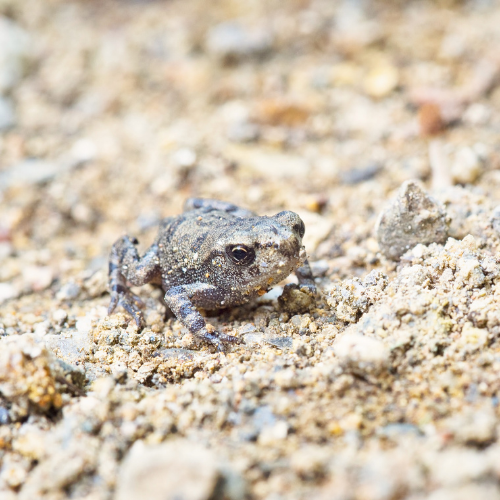
Once their tails are absorbed, they leave the pond as tiny fully formed toads known as toadlets.
5. Adult Toads
Young toads spend several years growing on land before returning to the pond to breed.
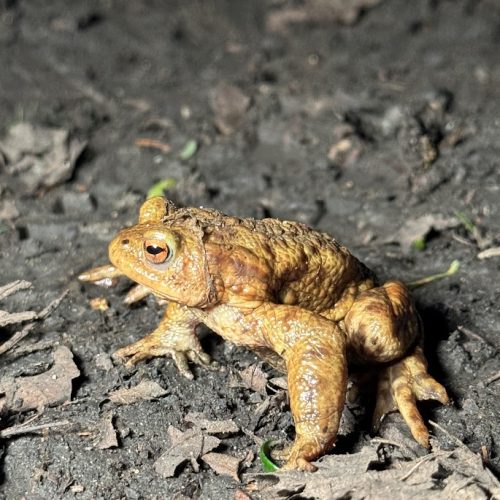
The Common Toad (Bufo bufo)
The species most often seen during migration season is the common toad (Bufo bufo). These amphibians spend most of their lives on land, living in woodland, gardens, hedgerows and fields.
Once a year, however, they return to the breeding pond where they were born. This journey marks the beginning of the next generation.
Toad Spawn
When female toads reach the pond, they lay long strings of eggs known as toad spawn. Unlike frogspawn, which forms clumps, toad spawn appears as long jelly-like strings wrapped around plants or vegetation in the water.
A single female can lay thousands of eggs during the breeding season.
Within a few days, these eggs begin to hatch.
Tadpoles
Once the eggs hatch, the young amphibians enter their tadpole stage.
Toad tadpoles are small, dark and almost black in colour. At this stage they live entirely in the water, breathing through gills and feeding on algae and organic matter in the pond.
Over the following weeks, the tadpoles begin to change. First their back legs appear, followed by their front legs, and their bodies gradually transform as they prepare for life on land.
From Tadpole to Toadlet
As their development continues, the tadpoles undergo an extraordinary transformation.
Their tails shrink and are absorbed into the body, their lungs develop, and they become tiny fully formed toads known as toadlets.
These miniature amphibians are often only around one centimetre long when they leave the water.
Later in the season, sometimes in huge numbers, thousands of toadlets emerge from the pond and disperse into the surrounding landscape.
Growing Up on Land
After leaving the pond, young toads spread out into nearby habitats such as woodland, hedgerows, gardens and fields.
Here they spend the next two to four years growing and feeding, mainly on insects, slugs and other small invertebrates.
Eventually, once they reach maturity, they will make the same journey their parents did – returning to the breeding pond to start the cycle again.
A Fragile Beginning
Although thousands of eggs may be laid in a single pond, only a small number will survive to adulthood. Predators, habitat loss and environmental changes all affect survival rates.
Despite these challenges, the life cycle of the common toad continues year after year, linking ponds, woodland and countryside habitats across the landscape.
Following the Life Cycle at Five Gates Lane
At sites like Five Gates Lane in Belton, volunteers witness the early stages of this life cycle every spring as toads migrate to the breeding pond.
Later in the season, the next generation begins to appear as tiny toadlets leave the water and disperse into the surrounding countryside.
You can follow updates from the local migration season in The Patrol Log, where volunteers share stories and observations from Five Gates Lane.
If you’d like to find a toad patrol near you, Froglife provides a national map of migration sites through their Toads on Roads patrol map.